The unforeseen
The Plot Against AmericaThe unforeseen is both a force acting on the Roth family and a principle of narration in The Plot Against America. It names the shock of living through events before they can be made coherent: a presidential election that overturns expectations, political decisions with intimate consequences, and a child’s sudden awareness that history can remake ordinary life. The novel’s repeated emphasis on what has never happened before makes uncertainty, rather than retrospective inevitability, the measure of experience.
Historical Reversals
The 1940 election illustrates how a reversal can be recast as though it had always been predictable. Charles A. Lindbergh wins 57 percent of the popular vote and carries 46 states, losing only New York and Maryland. At first, disbelief follows the result; soon, commentators explain it as the expression of familiar forces: respect for the two-term tradition, confidence in Lindbergh’s youth and aviation, and a national longing for normalcy. Their explanations turn a stunning outcome into something that seems inevitable after the fact. The contrast exposes the distance between history as people endure it and history as it is subsequently narrated.
The next rupture comes when Lindbergh travels to Iceland to meet Adolf Hitler and signs an understanding guaranteeing peaceful relations between Germany and the United States. Demonstrations and congressional denunciations register opposition, but the president’s brief address frames neutrality and military preparation as a settled national course. The episode makes the unforeseen more than private misfortune: political choices can abruptly alter the country’s position in the world, even as official language presents those choices as guarantees of security.
Family Upheaval and the Child’s Perspective
For Philip Roth, the unforeseen becomes inseparable from the dismantling of childhood routines. After Alvin’s wartime injury, the family’s roles change: his mother works all day at Hahne’s, Sandy works for Lindbergh after school, and his father, once defiant in public, breaks down in grief. Philip understands that he will not return to his former childhood. The change is not an abstract lesson in politics; it is a rearrangement of work, family presence, and emotional security inside the home.
The child’s response also reveals how abruptly experience can outpace understanding. After Mr. Wishnow’s suicide, Philip cannot tell what the law permits, whether his father is truly alive, or whether an FBI agent’s questioning happened as he remembers it. His confusion reaches backward and inward: he doubts his grasp of events even as other people confirm that they, too, were questioned. The narration links this bewilderment to a demand to grow up too quickly, making the crisis of knowledge part of the crisis itself.
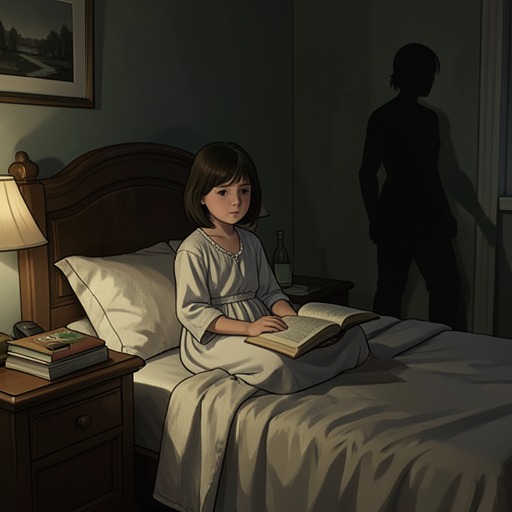
Philip’s illness gives that shock a further form. He remains in bed with a high fever for six days, and the family doctor names his condition as the childhood ailment of wishing things could be as they were. The phrase makes nostalgia sound like a diagnosis: recovery cannot simply restore the earlier family, because the circumstances that made childhood feel secure have changed. The repeated refrain of “Never before”—the great refrain of 1942 gathers these personal shocks into a historical rhythm. Each recurrence marks an experience for which Philip has no precedent, while the accumulation suggests that novelty itself has become the period’s defining condition.
Repetition, Memory, and Historical Meaning
The novel sets the shock of the present against the smoothing effect of historical narration. In school, unexpected events become harmless history once they have been chronicled; what was frighteningly open to change in its own time can later be arranged to look inevitable. Philip’s reflection identifies this transformation as a concealment: history, as a finished account, can hide the terror people felt before they knew what would happen. The unforeseen therefore describes not only events but also the gap between living through them and reading them afterward.
That gap is intensified by recurrence. The election first demonstrates that political outcomes can overturn expectation; the family’s changed circumstances then make the same lesson intimate. The refrain of what has never happened before does not offer a single explanation for these experiences. Instead, it registers their repeated arrival, as each new shock makes the previous sense of normal life harder to recover. Philip’s disrupted understanding and his fever-bound absence from ordinary activity show how historical upheaval enters the body and habits of a household without requiring the child to comprehend its full political design.
The Unresolved and the Boundary of Fiction
The concept persists in the novel’s ending, where Lindbergh’s disappearance remains unexplained. He is never found or heard from again, and reports, sightings, and conspiracy theories continue to circulate during the war and for years afterward. The account distinguishes the fact of his disappearance within the novel from the competing stories about what happened to him; even its most elaborate explanation reaches the family secondhand, through Aunt Evelyn, who says Anne Morrow Lindbergh had confided details to Rabbi Bengelsdorf. The unresolved fate prevents the narrative from turning every rupture into a closed, knowable sequence.
The postscript makes a related distinction between historical record and historical imagining. It identifies The Plot Against America as fiction and describes its documentation as a guide to where historical fact ends and invention begins. That framing does not eliminate uncertainty from the story. Instead, it makes the counterfactual premise legible as fiction built from historical materials, while the novel’s central concern remains the instability those materials evoke: no account written afterward can restore the experience of not knowing what comes next.